How to display erotic art at home is less a question of rules than of intention. A meaningful work should feel chosen for the room and for the person who lives there. When the subject is the adult male body, sculpture and relief can bring intimacy, memory, and visual strength into an interior without turning it into a statement for everyone else. For adult collectors, the most persuasive display is usually calm, personal, and specific.
Erotic art does not have to be hidden, but it does benefit from a setting that gives it dignity. Think of it as you would any work with emotional charge: give it a considered sightline, room to breathe, and light that lets its form be seen. The result can be sensual and refined at once.
Start with the room’s level of privacy
The best answer to how to display erotic art at home begins with who will encounter it. A bedroom, study, dressing area, reading corner, or private hallway can offer an easy fit because these spaces already carry a sense of retreat. They allow a collector to live with an image or sculptural form that feels intimate without asking it to perform for visitors.
A living room can work too, especially when the work reads first as a study of proportion, contour, and classical masculine beauty. The decision is not about whether the art is “appropriate.” It is about whether the room supports the degree of directness you want. If you prefer a work to be discovered rather than announced, place it along a route used by you and invited guests, rather than directly opposite the front door.
For queer and gay collectors, a private interior can be a particularly important place to make that choice freely. The art can hold desire, identity, or simply an affinity for the male form. It need not explain itself. MASOMA approaches that territory through Adult Classicism: sculptural attention to the ideal adult male form, muscular vitality, and a presence that remains intimate but refined.
Choose one clear sightline
Rather than filling every available surface, begin with one location where the work can register. A wall at the end of a hallway, the space above a low cabinet, a shelf near a chair, or the wall visible from a bed can create a natural moment of encounter. Stand at the room’s entrance and at the place where you most often pause. If the work is visible from both, the placement will usually feel intentional.
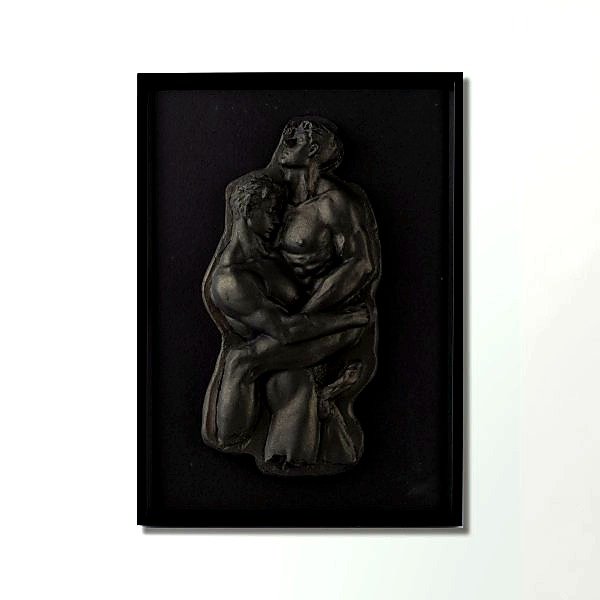
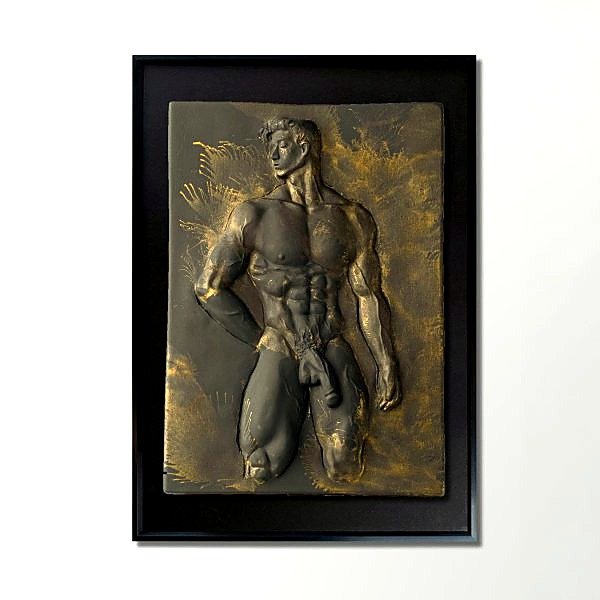
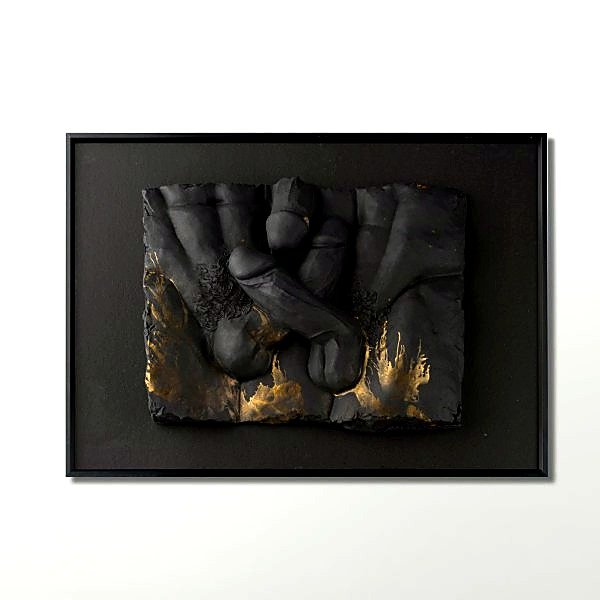
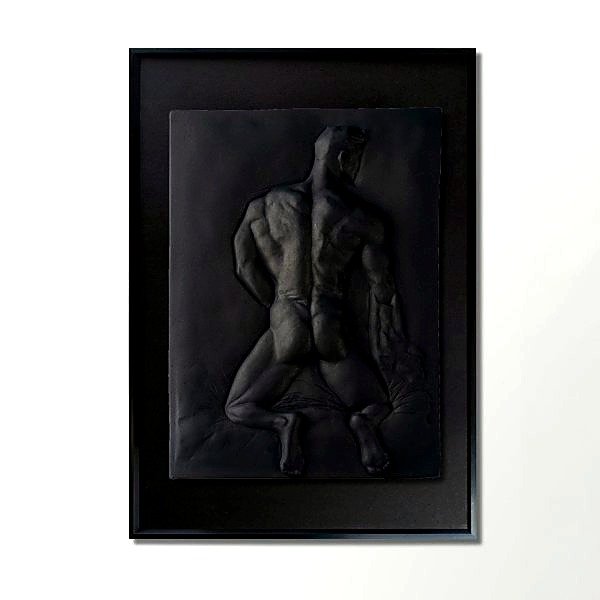
Wall-mounted sculpture is useful in smaller homes because it brings physical depth without taking floor space. Explore MASOMA’s male form wall reliefs if you want sculptural shadow and contour to become part of the architecture. A relief can feel quieter than a freestanding object while still rewarding a closer look.
Leave some visual quiet around the work. A male form sculpture placed among many frames, plants, or decorative objects may lose the silhouette and emotional clarity that drew you to it. One companion object—a lamp, a vessel, a stack of books, or a restrained textile—can be enough. The goal is a relationship, not a themed display.
Let light reveal the sculpture
Light changes the way erotic art is read. A frontal ceiling fixture can flatten relief, while indirect daylight or a nearby lamp can reveal the shadows that make a sculptural surface alive. You do not need gallery equipment. Observe the room in morning light, in the evening, and with its usual lamps on. Choose the wall where the form is legible without glare or dramatic hard reflections.
For a work with raised or modeled surfaces, angled light is often especially generous. It lets the eye follow a shoulder, torso, or curve of the body gradually. Soft light also supports a collected atmosphere: the work remains present, but not insistent. If the piece is near a window, check how it looks when the light changes before committing to a final spot.
Balance the body with material and color
Erotic art can feel most at home when the surrounding room has material texture of its own. Wood, linen, stone, ceramic, and a calm painted wall give a sculptural object something to answer. A neutral backdrop is reliable, but it is not the only option; deeper colors can create a more enveloping mood when the work still has enough contrast to read clearly.
Do not guess at scale from a photograph. Use the dimensions shown on the current product page, then mark the outline on the wall with removable tape or set aside a surface of similar size. View it from across the room and from the nearest seat. This small test helps reveal whether the work needs more air, a lower position, or a simpler setting. It also gives you time to decide how present you want it to feel.
If you are drawn to a sculptural object rather than a wall piece, browse MASOMA’s collectible objects. A single object can work beautifully on a console, bookshelf, or side table when the surface is not overfilled. The most convincing arrangement usually gives the piece a dedicated zone rather than treating it as an accessory.
Display with confidence, not apology
Collectors sometimes worry that erotic art must either dominate a room or remain concealed. In practice, there is a middle ground: let the work be part of the room’s visual language. Its body, shadow, and material can contribute to a space that feels mature and inhabited. A considered display invites people to notice the work on their own terms.
For a more intimate reference point, consider Embrace and check its current page for work-specific details before planning its setting. Pairing a product page with a clear display question makes the decision more practical: you can consider the available work, its listed information, and the room together rather than relying on an abstract idea of what belongs at home.
A collector note on living with erotic art
When deciding how to display erotic art at home, trust the room you are actually building, not a generic idea of decor. Choose the privacy level that feels right, give the work one honest sightline, and let light and negative space carry part of the composition. MASOMA makes sculpture for adult collectors who want the male form to live in a private interior as art and collectible design. For more perspectives on collecting and display, visit the MASOMA Studio or read the studio’s About & Contact page.