
Most collectors considering a male form sculpture for a private interior make the choice by sight first: the silhouette, the proportion, the pose. Material comes later, often after the piece has already arrived. In studio practice it is usually the other way around. The male form sculpture material you choose quietly decides how the body is read, how the surface catches the light, and how the object lives on a wall, a shelf, or a side table for years to come.
At MASOMA we work in three families: resin, plaster, and ceramic. They are not interchangeable. Each one stages the ideal adult male form in a slightly different visual key, and each one asks something different of the room. This studio note walks adult collectors through how those choices are made and what to expect when a piece of male form sculpture material is brought home.
Why the material matters before the pose
A figure of the ideal adult male form is built from a vocabulary of small decisions: the tilt of the head, the resting tension in the shoulders, the proportion of the torso to the limbs. Material is what carries those decisions into your space. Resin, plaster, and ceramic each hold a mould line, a chisel mark, or a hand-finished surface in a way that belongs to that material alone. The pose may be classical; the material decides whether the piece reads as a study, a portrait, or a permanent object.
Resin: clean weight, faithful surface
Resin is the most forgiving of the three for capturing fine surface work. It holds the crispest transitions between muscle groups, which is why it is the material we reach for most often when a piece depends on a sharp reading of the form. A resin cast carries the tactile evidence of hand-finishing without becoming heavy on the wall. For adult collectors, this means a few quiet advantages:
- Light enough to mount on a standard wall stud behind a plaster or drywall surface.
- Stable through seasonal humidity shifts that would move a heavier cast.
- Faithful to the gesture of the original carving, including the soft transitions that make Adult Classicism feel alive rather than anatomical.
If you have ever picked up a resin cast and been surprised at how warm and quiet it feels beside a stone reproduction, that is the difference at work. Resin lets the body read first, and the male form sculpture material read second.
Plaster: the look of the sculptor’s studio
Plaster is where the studio vocabulary is loudest. A plaster cast wears its chisel marks and trowel passes in plain sight. Surface tool marks are not smoothed away because they are the point. Adult Classicism, in our reading, leans on plaster when the intention is to keep the work close to the maker’s hand. You see the studio in the object.
The trade is visual honesty for practical softness. Plaster is more porous than resin, more sensitive to humidity, and warmer to the touch than ceramic. In a private interior it rewards dry, stable rooms and gentle cleaning. For a collector who wants the piece to read as a sculptor’s object rather than a decorative one, plaster is often the natural male form sculpture material to choose. It also photographs with a soft matte that reads beautifully in raking light, which is part of why it has stayed in the studio vocabulary for so long.
Ceramic: weight, permanence, and presence
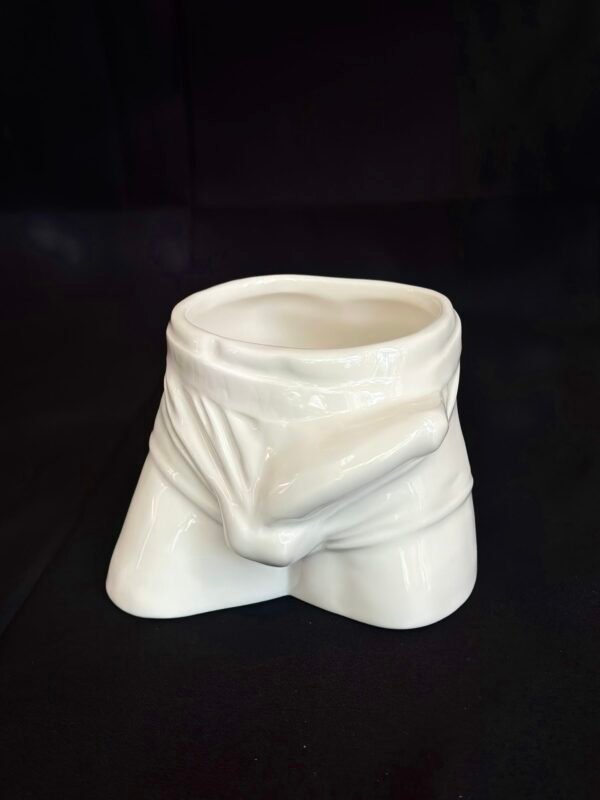
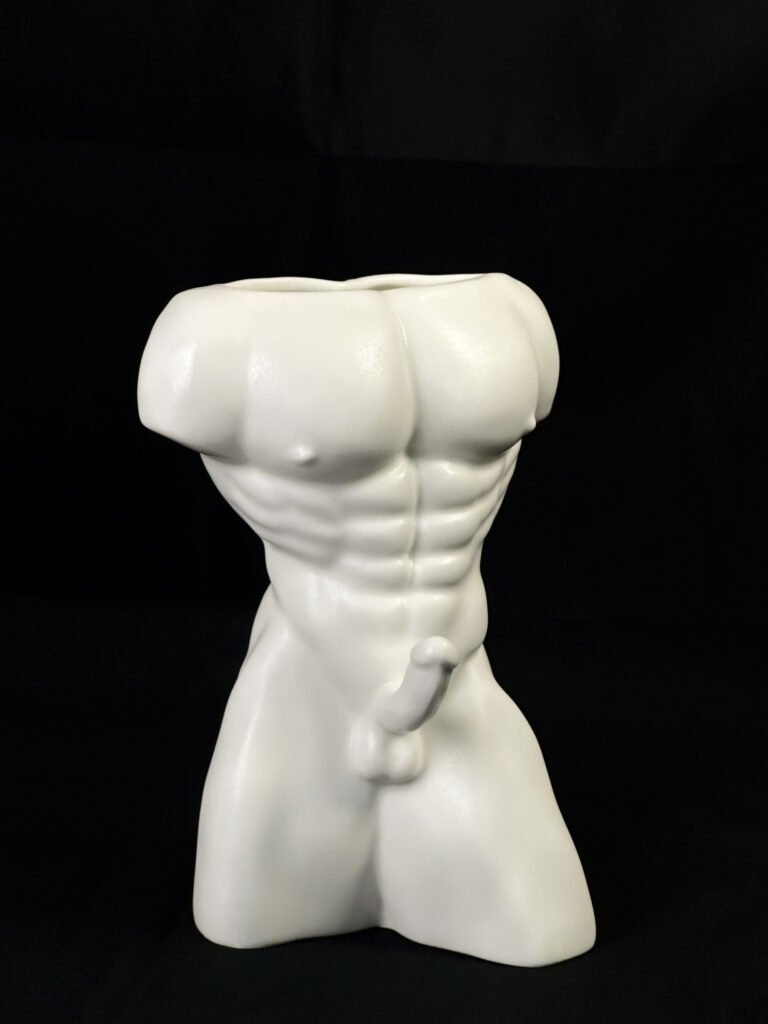
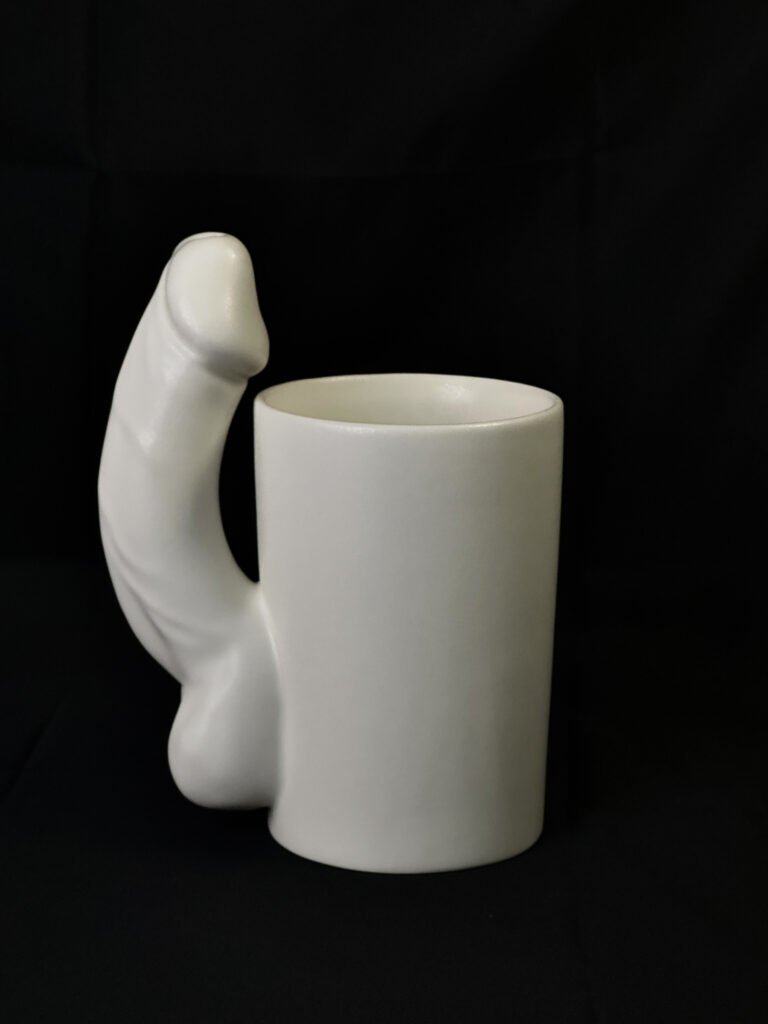
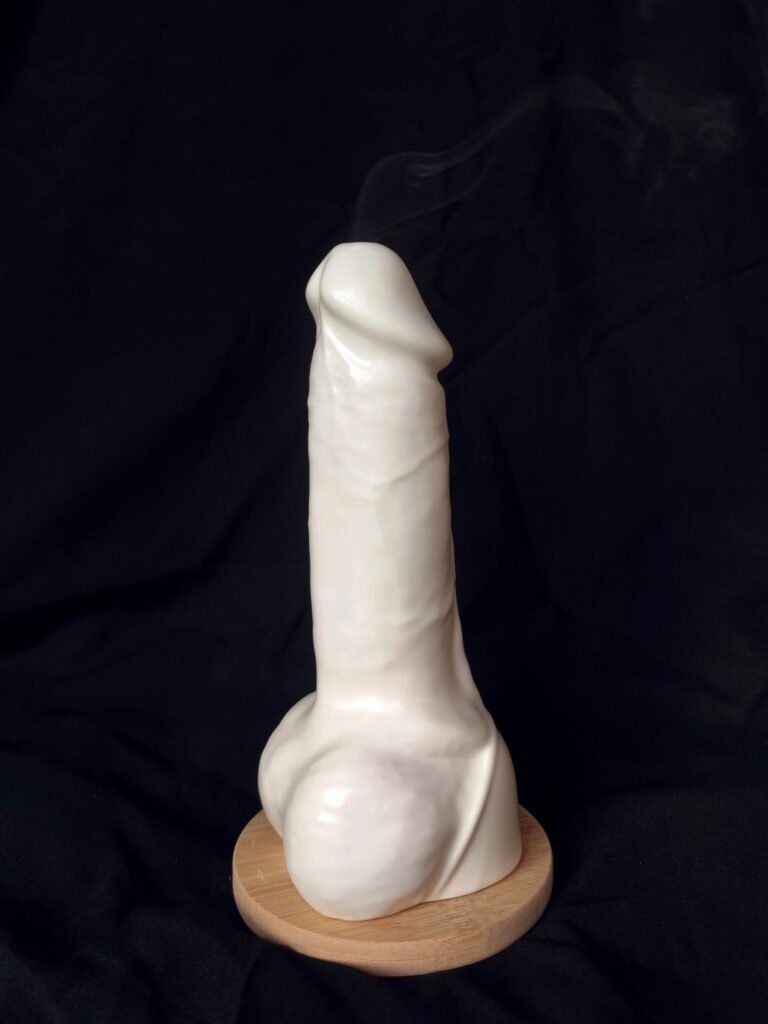
Ceramic is the slowest and most permanent of the three. Once fired, the surface has the kind of density that does not shift from one decade to the next. For a collector thinking about a male form sculpture that will be in a private interior for a long time, ceramic offers a presence the other two materials approach but do not fully reach. A ceramic cast has weight that you read before you touch it.
The cost of that presence is practical. Ceramic is heavier on the wall and on the shelf, and it is less forgiving of accidental impact than resin. In return, it gives the ideal adult male form a stillness that suits certain display positions: a low plinth in a study, a centred panel above a writing desk, or a single object on a console that has room around it. Choose ceramic when you want the body to feel settled rather than suspended.
How adult collectors choose between them
In the studio we talk about male form sculpture material the way a collector should: in terms of the room, not the catalogue. Three short tests help:
- Look at the wall or shelf you have in mind. Resin handles most standard interior surfaces. Plaster wants a dry room. Ceramic wants a surface that can carry weight without flexing.
- Decide what you want the piece to say first. If you want the body, choose resin. If you want the maker’s hand, choose plaster. If you want permanence, choose ceramic.
- Notice the light in the room. Direct raking light is unkind to high-gloss finishes and unkind to soft matte ones for opposite reasons. A studio note worth keeping: resin carries clean studio light; plaster rewards a single soft source; ceramic is at its best when the light comes from one direction and stays put.
Material will not save a piece that is wrong for a room, but the right male form sculpture material will quietly lift a piece that is right for you.
A studio note on Adult Classicism in practice
Adult Classicism is, in part, a discipline about material. Classical proportion and ideal adult masculine strength do not belong to one substance alone. They live in the way the maker uses each male form sculpture material to land the same idea. Once you begin to read the studio vocabulary this way, a private collection starts to make sense as a small, coherent body of work rather than a sequence of separate objects.
Browse the MASOMA Studio to see how each release is paired with the material it was made for, or start with a current sculptural object such as Dreamer and trace the rest of the body of work from there. If you have a question about a specific piece, the About & Contact page is the right place to write, and Shipping & Returns explains how each male form sculpture material is prepared before it leaves the studio. These works are intended for the rooms adult collectors choose carefully.